We deserve a better word than spatula.
The kitchen is full of simple-sounding implements: tongs, knife, spoon, fork. Even spork. Single syllable. Concise. Precise.
Spatula, on the other hand, sounds scientific, clinical, declinable, Latin (it is). It’s fun to say.
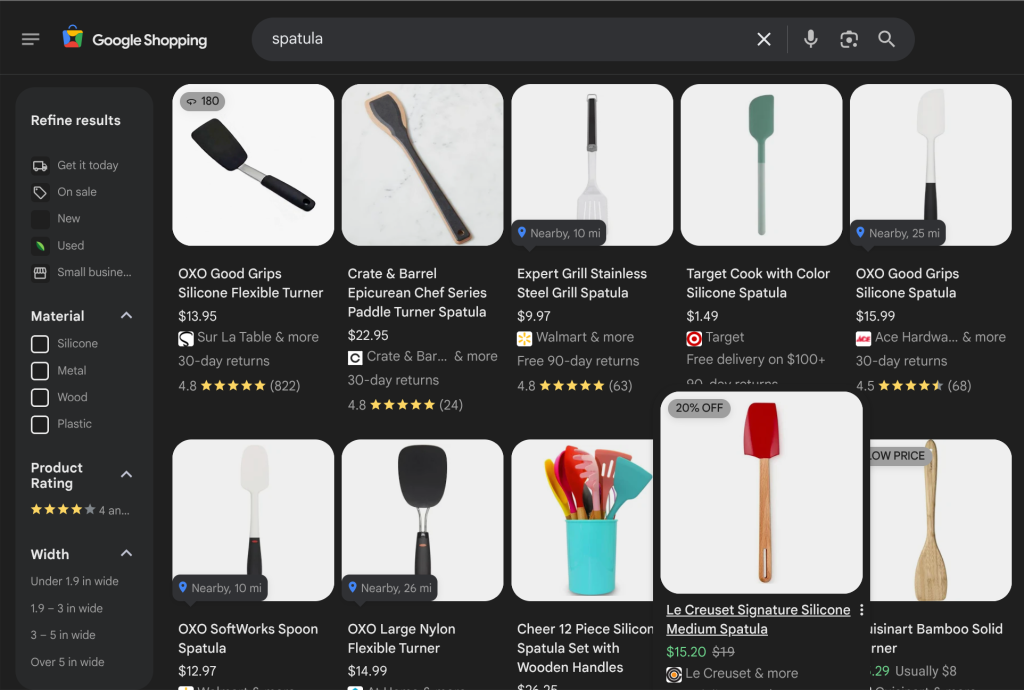
But the term simply means a long handled implement with a wide flat end. A spatula could be a rubber tool used to scrape food out of a bowl (a pot scraper). It could be made of metal and used to flip a burger (a pancake turner). It could even be a wooden stirrer. If I’m holding a heavy hot cast iron pan and I ask my husband to hand me a spatula, he needs to know what I need to do before he can choose the right implement. Context is key, and in a high pressure / high danger situation, spatula is just too generic a term.
The Latin spatula is the diminutive of spatha (a broad, flat tool or weapon), which came from the Greek ????? (spath?), a hoplite’s sword. This is also the word we get “spade” from.
To call a spade a spade “use blunt language, call things by right names even if homely or coarse” (1540s) translates a Greek proverb (known to Lucian), ten skaphen skaphen legein “to call a bowl a bowl,” but Erasmus mistook Greek skaph? “trough, bowl” for a derivative of the stem of skaptein “to dig,” and the mistake has stuck. https://www.etymonline.com/word/spatula
Let’s call a spade a spade. Let’s say what we really mean. Let’s refer to pot scrapers, pancake turners, stirrers. We already have other kitchen tools with complex words: potato masher, pastry cutter, citrus squeezer. I argue we retire “spatula” to the dustbin of history.


Leave a Reply